


You're standing in front of two letterman jackets that look almost the same on a screen. Same color blocking, same patches, same clean varsity silhouette. Then one arrives heavy, warm, and structured, while the other feels softer, lighter, and better for a hoodie layer. That difference isn't a small detail, it's the whole jacket.
Letterman jacket fabric decides how the piece sits on your shoulders, how it moves through Stockholm weather, and how it ages after repeated wear. A good jacket can feel sharp on a cold commute and still work with oversized streetwear, but only if the material mix matches how you dress. That's the game, not just the logo or patch placement.
Table of Contents
- Why Letterman Jacket Fabric Changes the Entire Jacket
- Understanding the Classic Wool and Leather Build
- Comparing Wool, Leather, Fleece, and Fabric Blends
- When Lighter Fabrics Work Better for Streetwear
- How to Care for Different Letterman Jacket Fabrics
- Matching Fabric to Climate, Fit, and Styling
- Choosing a Letterman Jacket Fabric With Confidence
Why Letterman Jacket Fabric Changes the Entire Jacket
A letterman jacket can look nearly identical online and still wear completely differently in real life. One body may be built from heavy melton wool with leather sleeves, while another uses a lighter blend with synthetic panels. The first one traps heat, keeps its shape in wind, and feels more like outerwear. The second one layers easier over a hoodie, but it won't always hold the same structure.
The fabric decides the first impression and the long-term wear
On a streetwear level, the fabric changes three things immediately, weight, drape, and recovery. Heavy wool sits cleanly and feels more rigid, which is why it reads as classic varsity. Lighter constructions fall closer to the body, move more freely, and often feel more casual from day one.
That also affects how the jacket ages. Dense wool and leather usually develop character more slowly, while lighter blends can show cuff wear, pilling, or loss of shape sooner if they're carried under backpacks or worn hard in the city.
Practical rule: if the jacket needs to act like outerwear, choose heavier fabric. If it needs to behave like a layer, choose a lighter build.
You can see this tension in modern streetwear, where a boxy tee like 2Ghetto Oversized Boxy Tee wants space under a jacket without fighting the silhouette. That's why the fabric matters as much as the cut. A thick body can make the whole look feel grounded, but it can also get stiff if the jacket is too heavy for daily indoor-outdoor movement.
Understanding the Classic Wool and Leather Build
The traditional letterman jacket is a mixed-material system, not one fabric in isolation. The classic version dates back to 1865 at Harvard University, when the baseball team first wore athletic sweaters marked with a large letter, and by the 1930s the design had evolved into wool jackets with leather sleeves and chenille letters, establishing the two-material construction that still defines the category today Analog Shift. That structure still matters because each part has a job.
Body, sleeves, ribs, and lining each do a different job
The body is usually melton wool, a tightly processed wool that's denser than ordinary knitwear and more wind resistant. Traditional descriptions place heavy melton wool around 24 to 32 oz for warmth and durability, and technical guides also describe varsity bodies around 18 to 24 oz or roughly 450 to 750 GSM for heavyweight structure Vocal, Fancy Stitchin. That density helps the jacket hold patches, embroidery, and its square torso without sagging.
The sleeves are traditionally genuine leather or horsehide, steerhide, or cow leather. That choice gives abrasion resistance at the elbows and shoulders, where the jacket takes the most abuse. Premium builds often add double-needle felled seams for extra strength, which helps the jacket survive repeated wear better than a loose fashion shell True Varsity.
The ribbed collar, cuffs, and waistband aren't decoration. They seal in warmth and keep the fit anchored, especially when you're layering over a tee or hoodie. Traditional letterman jackets commonly use this rib trim as part of the standard build Wikipedia).
The inside lining changes comfort a lot. A quilted or smooth lining helps the jacket slide over midlayers and keeps sweat from sitting directly against the wool. If the jacket is meant for colder months, that lining becomes part of the performance, not a hidden extra.
Comparing Wool, Leather, Fleece, and Fabric Blends
The easiest way to understand letterman jacket fabric is to compare the main material families by what they do on the body. Wool and leather are the heritage answer, but fleece, satin, nylon, and blended shells have a real place in modern streetwear, especially when the jacket is worn more for style than for sport history Clothoo.
| Letterman Jacket Fabric Comparison | Warmth | Durability | Weight | Drape | Weather Response | Care |
|---|---|---|---|---|---|---|
| Melton wool body | High | High | Heavy | Structured | Good wind resistance | Careful dry cleaning |
| Leather sleeves | Moderate as a shell, strong at blocking wind | Very high | Heavy | Stiffer at first, then breaks in | Better abrasion resistance | Conditioning needed |
| Fleece and sherpa-style layers | Moderate to high for weight | Moderate | Light to medium | Soft and relaxed | Better for dry, casual wear | Easier washing, but watch pilling |
| Cotton-poly and wool-blend bodies | Moderate | Moderate to high | Medium | Softer, less rigid | More forgiving in daily wear | Usually easier than full wool |
Melton wool gives the cleanest varsity shape. It's the right choice if you want the jacket to sit upright over a sweatshirt and keep that old-school silhouette. The tradeoff is care, because wool needs more attention and doesn't love rough handling.
Leather sleeves do something different. They add abrasion resistance and make the jacket age into a patina, which gives the piece character over time. That's the premium route if you want the jacket to feel like a real outerwear investment instead of a trend layer.
Fleece and sherpa are the comfort-first option. They're lighter, easier to live with, and often better when the jacket is part of an everyday city rotation. A piece like 2Ghetto Midweight Fleece Hoodie works in the same layering logic, since softer midweight construction keeps the profile clean without adding too much bulk.
The right fabric isn't the heaviest one. It's the one that matches your climate, your layers, and how often you actually wear it.
For structure-heavy jackets, the pattern matters too, and 2Ghetto's letterman jacket pattern guide fits naturally into that conversation. Fabric and cut always work together. If the fabric is soft but the pattern is boxy, the jacket feels more contemporary. If both are rigid, the piece reads as classic varsity.
When Lighter Fabrics Work Better for Streetwear
Heavier doesn't always mean better, especially in city dressing. In Stockholm, you often move between cold outdoor air, overheated cafés, tram platforms, and indoor spaces with sharp temperature shifts. A dense wool jacket can be perfect outside, then feel too stiff or sweaty once you're inside for more than a few minutes.
Streetwear often needs movement, not just insulation
That's where lighter constructions make sense. Fleece-backed wool, bonded knits, sherpa-lined bodies, and polyester-blend shells can all deliver a better drape when the jacket is worn over oversized hoodies or tees. They also tend to dry faster after light rain and feel less restrictive at the shoulders.
The downside is just as real. Synthetic fills can flatten, light fleece can pill under backpack straps, and bonded knits can lose structure if you wear them hard every day. None of that makes them inferior, it just means they're doing a different job.
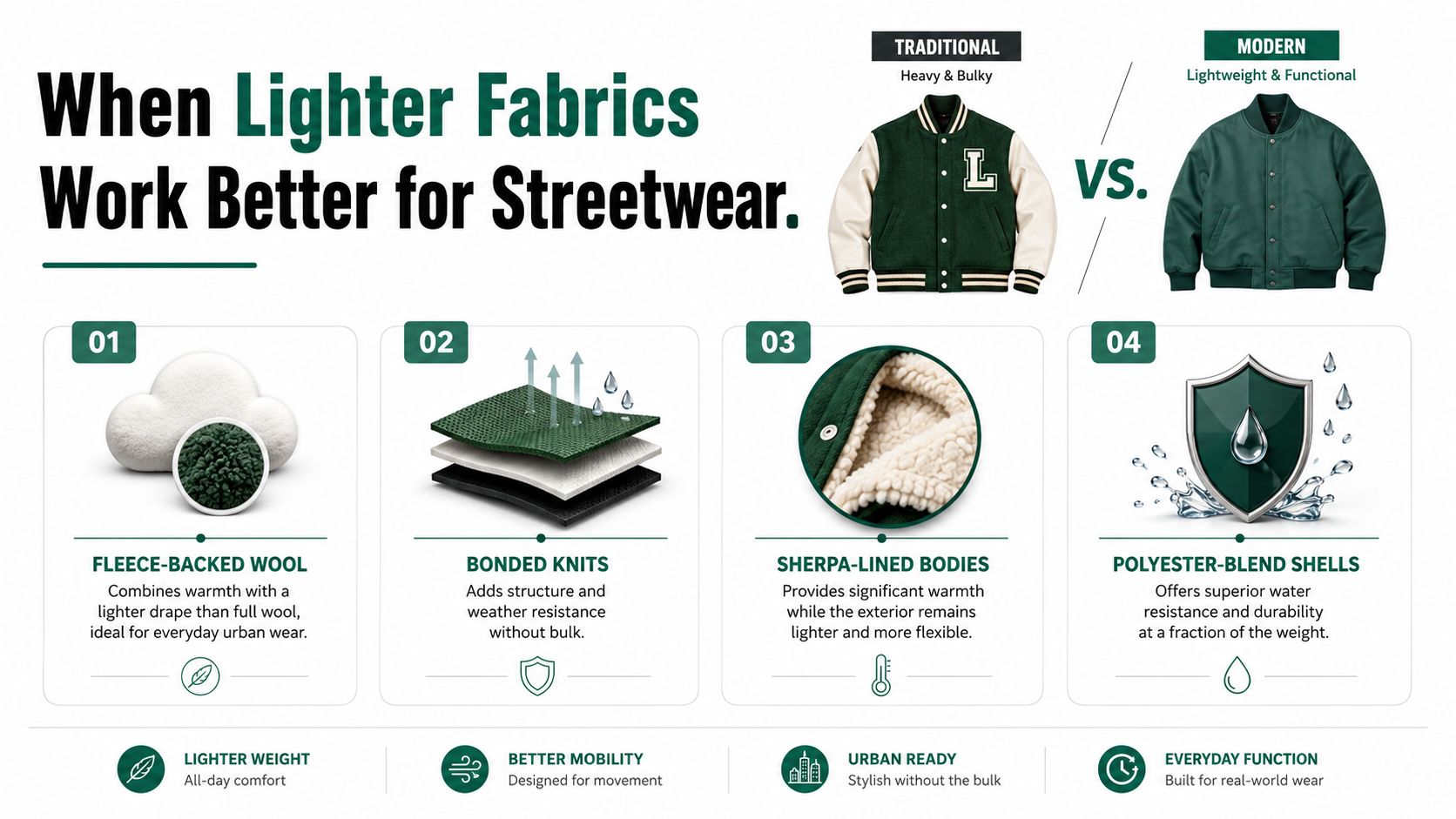
A lighter jacket often works best when the outfit already has volume. If you're styling a boxy tee, a hoodie, and loose trousers, a heavy wool shell can make the whole fit feel overbuilt. A softer jacket lets the silhouette breathe and keeps the layers from fighting each other.
For a brand like 2Ghetto, that matters because Scandinavian streetwear usually leans clean, layered, and unforced. A lighter fabric can still feel premium if the shape is right and the surface looks intentional.
How to Care for Different Letterman Jacket Fabrics
Care starts with the label, not with the stain. Check the wool percentage, leather grade, lining composition, and whether the garment is marked dry-clean-only before you do anything else. Mixed-material jackets punish guesswork, because one bad wash can shrink wool, dry out leather, or distort the rib trim.
Read the jacket before you clean it
For melton wool bodies, spot cleaning works better than aggression. Use cool water and gentle blotting, then let the area dry naturally instead of rubbing the fibers. A soft garment brush helps lift dust and surface lint without roughing up the nap, and steaming is safer than ironing when you want the shell to look fresh.
Leather sleeves need their own routine. Conditioning every few months helps prevent cracking, especially at the elbow bend where the sleeve flexes most. If the leather starts looking dry, treat that as a maintenance warning, not a cosmetic issue.
Wool also doesn't like agitation. Machine washing can felt the fibers and ruin the jacket's shape, so the safer path is always slow and controlled care. Storage matters too. Wide wooden hangers keep the shoulders from collapsing, breathable garment bags prevent stale moisture, and cedar blocks help protect wool between wears.
The same logic applies to mixed streetwear pieces in your wardrobe, including a heavy crewneck like 2Ghetto Heavy Blend Crewneck, where fabric structure affects how clean the fit stays after repeated use.
If a jacket has wool, leather, and synthetic parts, treat each panel like a different material. One cleaning method rarely works for all three.
A simple care routine that keeps the jacket wearable
- After each wear: air it out on a hanger, especially if you've worn it on public transport or under a backpack.
- When the wool looks dusty: brush it lightly with a soft garment brush.
- When the sleeves look dry: condition the leather, but keep product away from the wool body.
- When the lining feels tired: turn the jacket inside out only if the care label allows it, then handle it gently and dry flat.
- When storing for the season: use a breathable garment bag, not plastic.
That routine takes a little more time than washing a sweatshirt, but it keeps the jacket sharp for years instead of months. For a category built on heritage, that care is part of the value.
Matching Fabric to Climate, Fit, and Styling
The right fabric depends on how the jacket will live in your wardrobe. Cold commutes, oversized layers, mild spring weather, and daily backpack wear all ask for different material behavior. A jacket that works in one setting can feel wrong in another.
| Climate / Scenario | Recommended Fabric | Fit and Styling Note |
|---|---|---|
| Freezing commute | Heavy melton wool with leather sleeves and quilt lining | Best when worn as real outerwear over a hoodie or knit |
| Oversized layering | Bonded knit or lighter fleece | Keeps the dropped-shoulder look open instead of rigid |
| Transitional autumn or mild spring | Cotton-blend shell with minimal insulation | Easier to wear indoors without overheating |
| Daily rotation with backpacks and café seating | Durable polyester-cotton blend | Better when you need abrasion resistance without heavy weight |
If you're dressing for colder Nordic weather, heavier wool still earns its place. It keeps the torso warm, holds the shape, and feels grounded when the wind picks up on the way across the city. That's the version that looks most traditional and behaves most like outerwear.
If your look is built around hoodies, tees, and looser proportions, lighter fabric usually makes more sense. It preserves the oversized line and avoids the bulky feel that can happen when a thick jacket sits over already substantial layers. For transitional months, that difference matters more than the label on the hanger.
For daily wear, choose based on abrasion risk. If you're carrying a backpack, sitting on hard benches, or moving through the city all day, a tougher blend can age more gracefully than a delicate heritage shell.
Choosing a Letterman Jacket Fabric With Confidence
Start with the look you want, then work backward to the fabric. If you want retro varsity, go toward wool and leather. If you want something more minimal, bonded knits or clean blends will usually give you a sharper, less formal read.
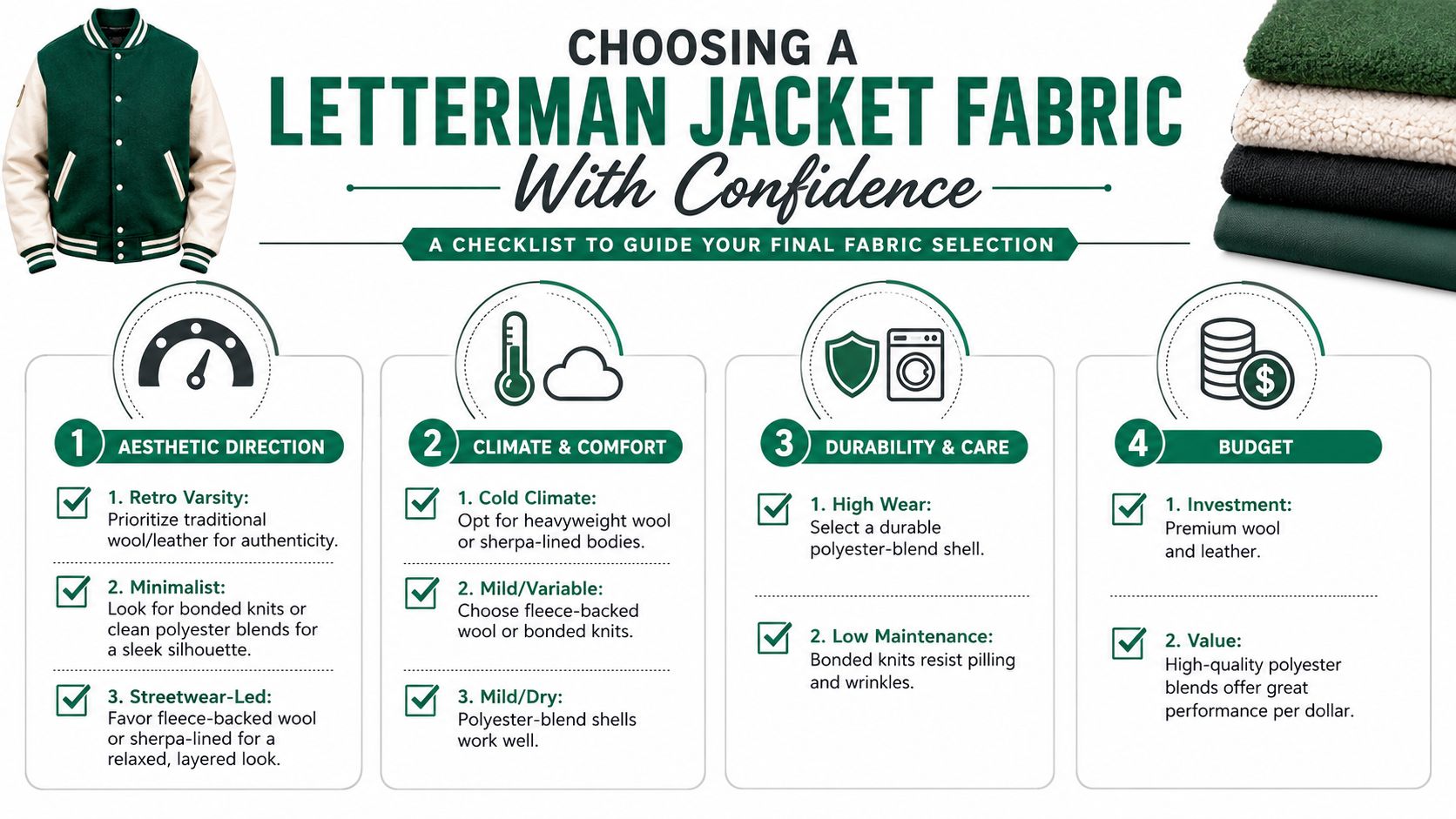
Use four lenses before you buy
- Aesthetic direction: heritage, minimalist, or streetwear-led.
- Climate range: cold, variable, or mild.
- Care tolerance: dry cleaning, conditioning, or easy wash habits.
- Layering plan: tee, hoodie, or knit underlayer.
Wool or wool-blend bodies make the most sense when you want structure and warmth. Leather sleeves make the jacket tougher at the points that wear fastest. Fleece is the easier answer for relaxed everyday layering, and synthetic blends are often the safer pick for transitional weather or frequent rotation.
The smartest choice is the one you'll wear. A jacket that feels perfect on paper but stays in the closet doesn't matter much. A slightly lighter piece that fits your climate, your outfits, and your routine will always earn more mileage.
2Ghetto builds streetwear with a Stockholm edge, and that same logic applies to fabric. If you want pieces that layer cleanly with hoodies, tees, and outerwear, browse 2Ghetto for limited-run unisex apparel that fits the city and the season.