


Most advice on an oversized tee is lazy. People tell you to just buy two sizes up and call it boxy, but that usually gives you more length, more sleeve drop, and less shape, which is the opposite of a true oversized boxy T shirt.
The difference matters because the silhouette changes how the whole outfit sits. In Stockholm and across Scandinavian streetwear, the clean look comes from proportion, not just volume, and that's why boxy tees keep showing up in monochrome wardrobes, layered fits, and varsity-heavy styling.
Table of Contents
- Why Oversized and Boxy Are Not the Same Thing
- Anatomy of a True Boxy Fit
- Fabric Weight and Why It Holds the Shape
- How to Measure Yourself for the Right Size
- Boxy vs Relaxed vs Regular vs Longline Cuts
- Outfit Formulas for a Unisex Streetwear Look
- Building a Stockholm Streetwear Capsule Around the Tee
- Care and Maintenance to Keep the Box Intact
Why Oversized and Boxy Are Not the Same Thing
An oversized tee is about extra room. A boxy tee is about construction. That sounds subtle until you put both on, because one can hang loosely while the other holds a square shape.
A regular oversized shirt often gains its feel by adding length, shoulder drop, and sleeve volume. It can drape softly down the body, especially if the fabric is washed or lightweight. A boxy tee, by contrast, stays shorter and wider, with a hem that reads straight across instead of falling into a long line.
The practical difference in hand
If you've worn a vintage washed tee that hangs a bit and moves with you, you already know the oversized feeling. It's easy, but it can get sloppy fast if the cloth is too soft or the body is too long. A heavyweight cotton tee feels different, because it stands away from the body more and keeps its edges clearer.
That's the key point shoppers miss. Oversized describes the amount of ease, while boxy describes the pattern shape. You can have an oversized tee that isn't boxy at all, and you can also have a boxy tee that doesn't feel extreme.
A tee can be roomy and still be wrong for the silhouette you want.
The market reflects that distinction too. Fortune Business Insights estimates the oversized apparel market at USD 130.18 billion in 2025 and USD 221.22 billion by 2034, with oversized tops and T-shirts holding 35.08% of the segment in 2025, which shows how central relaxed-fit tees have become in global apparel demand. Their estimate for Asia Pacific at USD 48.30 billion in 2025 also shows this isn't just a local streetwear habit, it's a broad clothing pattern with serious scale. Fortune Business Insights via the referenced market summary
Anatomy of a True Boxy Fit
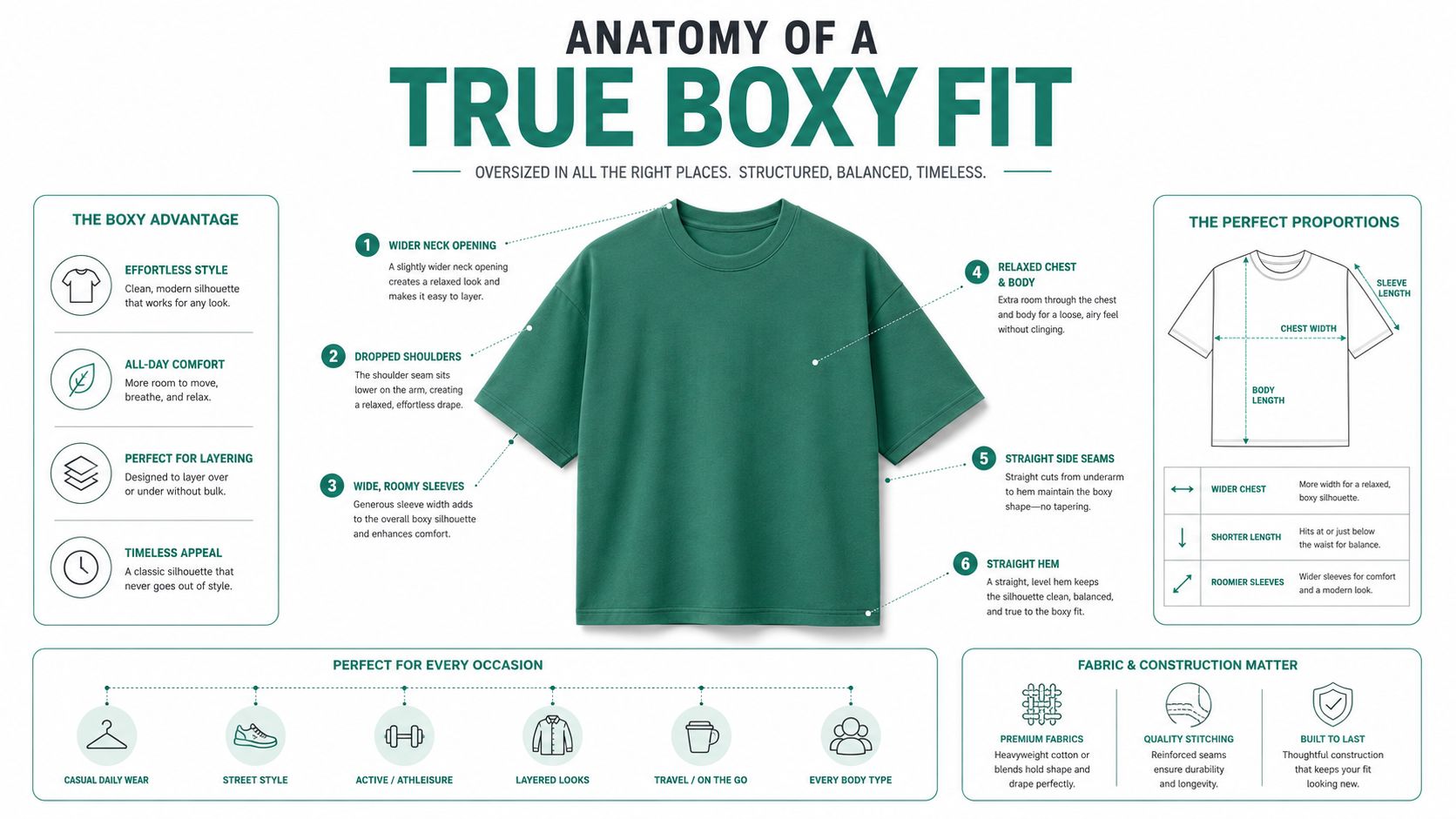
A true boxy tee starts at the neckline and shoulder line. The collar should feel firm enough to keep its ring shape after wear, with little neck-roll, so the top edge stays clean instead of collapsing into a soft scoop. That clean opening helps the shirt read squared-off from the first glance.
What to check with a tape measure
The chest width comes next. Technical guides commonly place a true boxy chest around 6 to 10 cm wider than a regular tee at the same size, with a longer body length that lands around mid-hip or lower to preserve the rectangular shape. The point is width paired with restraint in the length, so the hem stays visually clean. Technical fit guidance
Then check the side seams. A real boxy cut keeps a straight side line with no waist taper, so the shirt does not pull in when you sit, layer it, or move through the day. That straight geometry is what makes the piece feel drafted, not just sized up.
For streetwear brands, product language matters. 2Ghetto Oversized Boxy Tee uses dropped shoulders and a boxy shape, which is the kind of pattern language that signals the silhouette, not just the vibe.
A true boxy tee is usually drafted with shoulders sitting about 3 to 6 cm past the natural shoulder, chest width roughly 6 to 10 cm wider than a regular tee, and body length that hits mid-hip or lower. That balance keeps it square instead of just large.
Fabric Weight and Why It Holds the Shape
Fabric decides whether a boxy tee stays boxy after wear. A cut can look perfect on a hanger and still collapse after one wash if the cloth is too light or too unstable.
GSM, handfeel, and recovery
For oversized boxy tees, a common technical range is about 220 to 260 GSM, because that weight gives the garment enough mass to hold the square outline and resist shoulder collapse better than lighter tees. Once fabric moves into the 280 to 300+ GSM zone, breathability starts dropping, so heavier isn't automatically better. Oversized tee manufacturing guidance
Fiber content matters too. 100% cotton can shrink on the first wash, especially in length, while a cotton-poly blend tends to stabilize the shape more. Yarn count plays a role as well, because thicker yarns in the 18 to 24 singles range add body, while 30 singles and above usually feel lighter and can lose structure faster.
| Fabric Weight and the Boxy Hold | ||
|---|---|---|
| Weight (GSM) | Fiber | Shape Hold |
| 180 to 200 | Cotton or blend | Light hold, softer drape |
| 220 to 260 | Cotton or blend | Strong boxy hold |
| 240 to 280 | Heavier cotton-led fabrics | Best structure, firmer feel |
| 280+ | Heavier constructions | Very firm, less breathable |
The useful rule is simple. A heavier, more stable tee keeps the hem straight and the shoulder square, which is the whole point of the cut. If the fabric fights the pattern, the tee stops reading as boxy and starts looking like a stretched-up regular shirt.
How to Measure Yourself for the Right Size
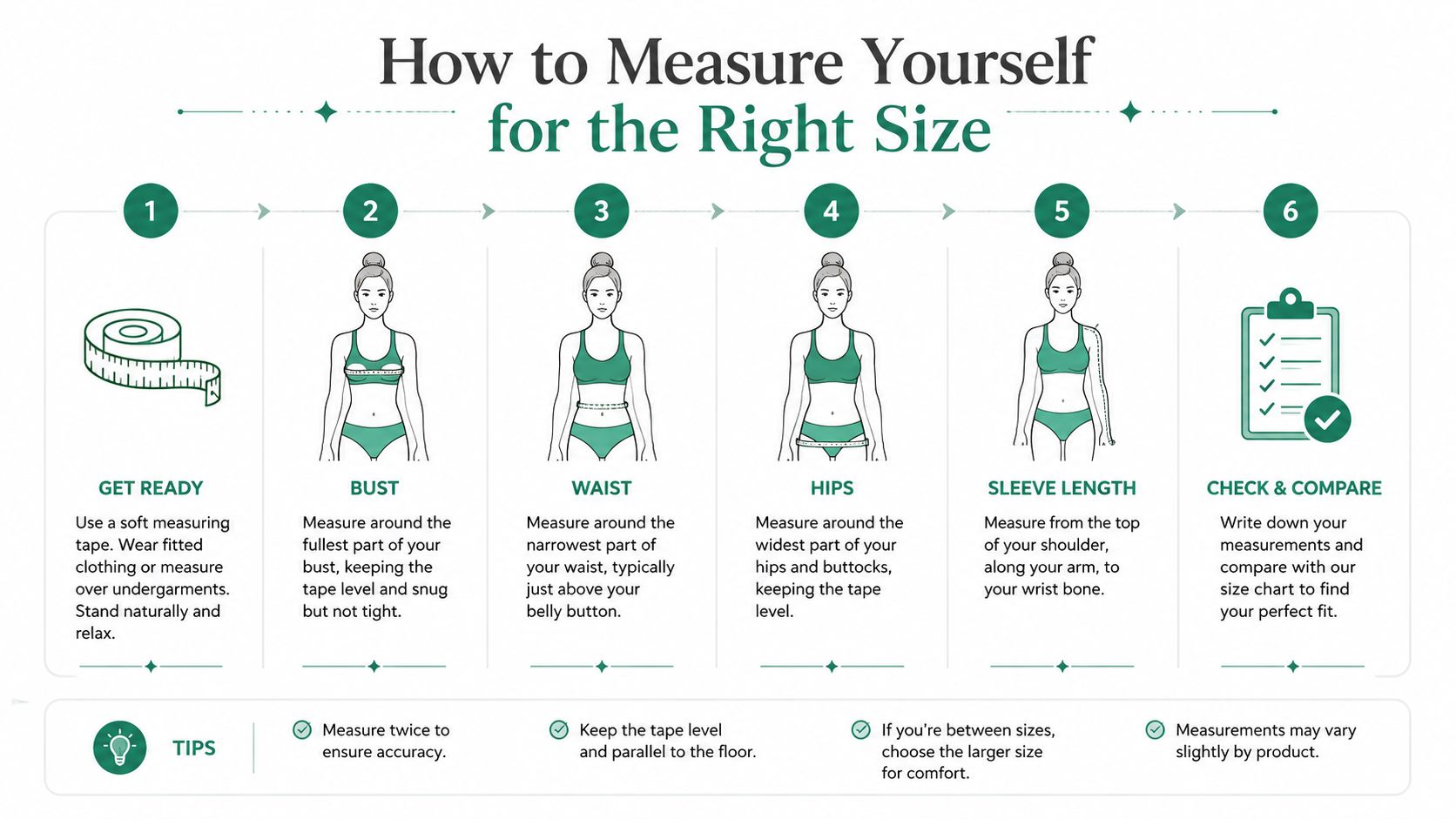
A bigger size does not automatically give you a better oversized boxy t shirt fit. The shape comes from flat garment measurements, not from guessing upward and hoping the shirt behaves.
Measure the body, then measure the garment
Start with your chest. Measure across the fullest part of your torso with the tape level and relaxed. Then measure shoulder width point to point, because that line decides whether the tee sits cleanly or starts slipping too far down the arm.
Compare those numbers to the garment chart. For most builds, a flat chest that sits roughly 6 to 10 cm wider than your body chest keeps the shirt open without turning it into a tent. If you plan to layer over a hoodie, stay closer to the wider end of that range, and if your frame is narrower, the lower end usually keeps the silhouette sharper.
Shoulder placement matters just as much. The seam should sit close to your natural shoulder edge, not drift far past it unless the pattern is meant to do that. On a true boxy tee, the width should do most of the visual work, while the shoulder stays controlled.
Practical rule: if the hem falls too far below the hip, the silhouette stops reading as boxy and starts looking borrowed.
Body length is the next check. Measure from the base of the neck to the hem of a tee that already fits you well, then compare that number with the product chart. For a cleaner line, aim for a hem around the upper fly or near mid-fly. If you want a more casual drape, let it sit just below the belt.
The 2Ghetto oversized boxy tee page is useful because it shows the garment in a unisex streetwear silhouette with an easy layered fit, which helps you judge shape instead of chasing a size label. Use the sizing chart there as the final check before you buy.
Repeat the same process for the hoodie or overshirt you plan to wear with it. If the outer layer is too long or too narrow, the tee loses its balance underneath and the whole outfit starts to feel accidental.
Boxy vs Relaxed vs Regular vs Longline Cuts
The easiest way to understand a boxy tee is to place it on a fit spectrum. Regular, relaxed, boxy, and longline each solve a different problem, and buying the wrong one is usually a proportion mistake, not a style mistake.
Where each cut sits
A regular tee follows the shoulder seam out and skims the torso with very little extra room. It's the closest to the body and feels neat, but it doesn't create much silhouette on its own. Relaxed fits keep the same basic shoulder line and add a little ease through the chest and waist, so they move softly without changing the shirt's proportions much.
A boxy cut changes the geometry. It widens the chest more abruptly, shortens the body, and keeps the hem high enough to read as a block rather than a drape. Longline goes the other way, extending body length well past the belt while often keeping the shoulders narrower, which gives you vertical pull instead of width.
| T-Shirt Cut Comparison | Shoulder | Chest | Length | Drape |
|---|---|---|---|---|
| Regular | Aligned | Close to body | Standard | Minimal |
| Relaxed | Aligned | Slightly wider | Standard to slightly longer | Soft |
| Boxy | Slightly dropped | Wide | Shorter | Structured |
| Longline | Narrower or aligned | Moderate | Extended | Vertical |
If your goal is a clean square on the body, the longline is the wrong buy. If you want a bit more breathing room but not a defined shape, the relaxed tee makes more sense. Boxy is the one you choose when the cut itself is supposed to do the work.
Outfit Formulas for a Unisex Streetwear Look
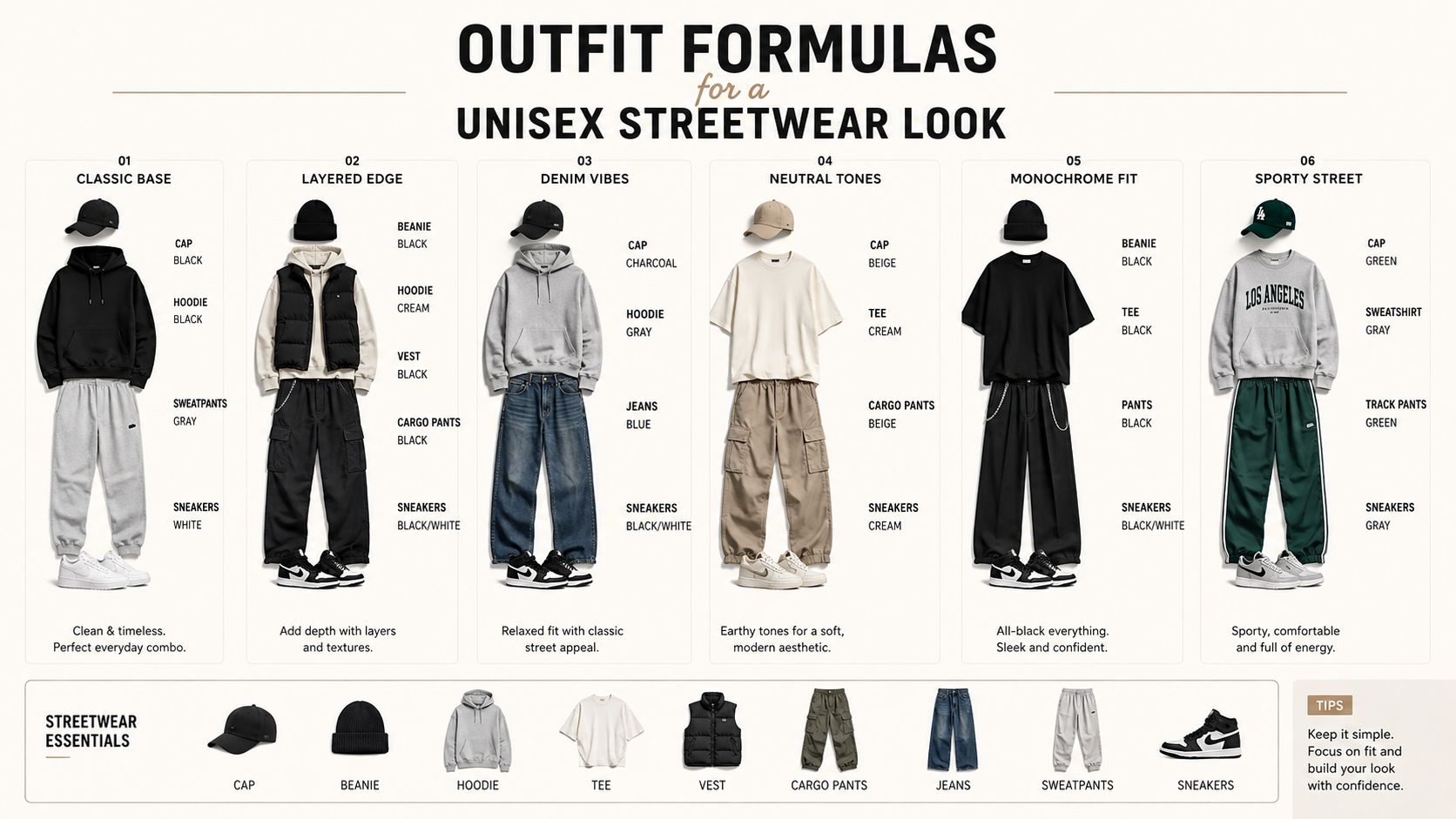
The boxy tee works best when the rest of the outfit respects its geometry. Keep the lower half cleaner, and let the shirt carry the visual weight up top.
Four ways to build the proportions
A monochrome block is the most direct route. Wear a black boxy tee with black straight-leg trousers and black low-top shoes, then give the front hem a small French tuck so the square body still shows at the chest. That single move sharpens the waist without killing the shape.
An open overshirt or chore jacket works when you want layering without bulk. Leave the tee hem slightly uneven beneath the outer layer, pair it with cropped wide-leg pants, and finish with canvas sneakers. The tee stays visible as a block under the open layer, which keeps the outfit from looking flat.
A cropped bomber changes the mood fast. Pair the tee with high-rise pleated trousers and let the hem peek below the jacket, so the short upper layers and slightly broader tee line work together. That contrast gives you a stronger proportion story than stacking everything at the same length.
A sleeveless long vest over the tee leans into the athletic side of Stockholm streetwear. Add track pants and chunky trainers, and the shape starts reading more 1990s sportswear than classic minimalism. It's unisex by default, which is why this silhouette sits so easily in modern Scandinavian wardrobes.
If you want a wider T-shirt range for rotation, the 2Ghetto T-shirt collection is the place to look for related cuts that sit in the same monochrome lane.
Keep the bottom half calm. The tee should look intentional, not like it swallowed the rest of the outfit.
A good boxy tee doesn't need loud styling to work. Heavy cotton trousers, pleated wool, and nylon track pants all change the mood, but they should still leave the tee as the clearest shape in the outfit.
Building a Stockholm Streetwear Capsule Around the Tee
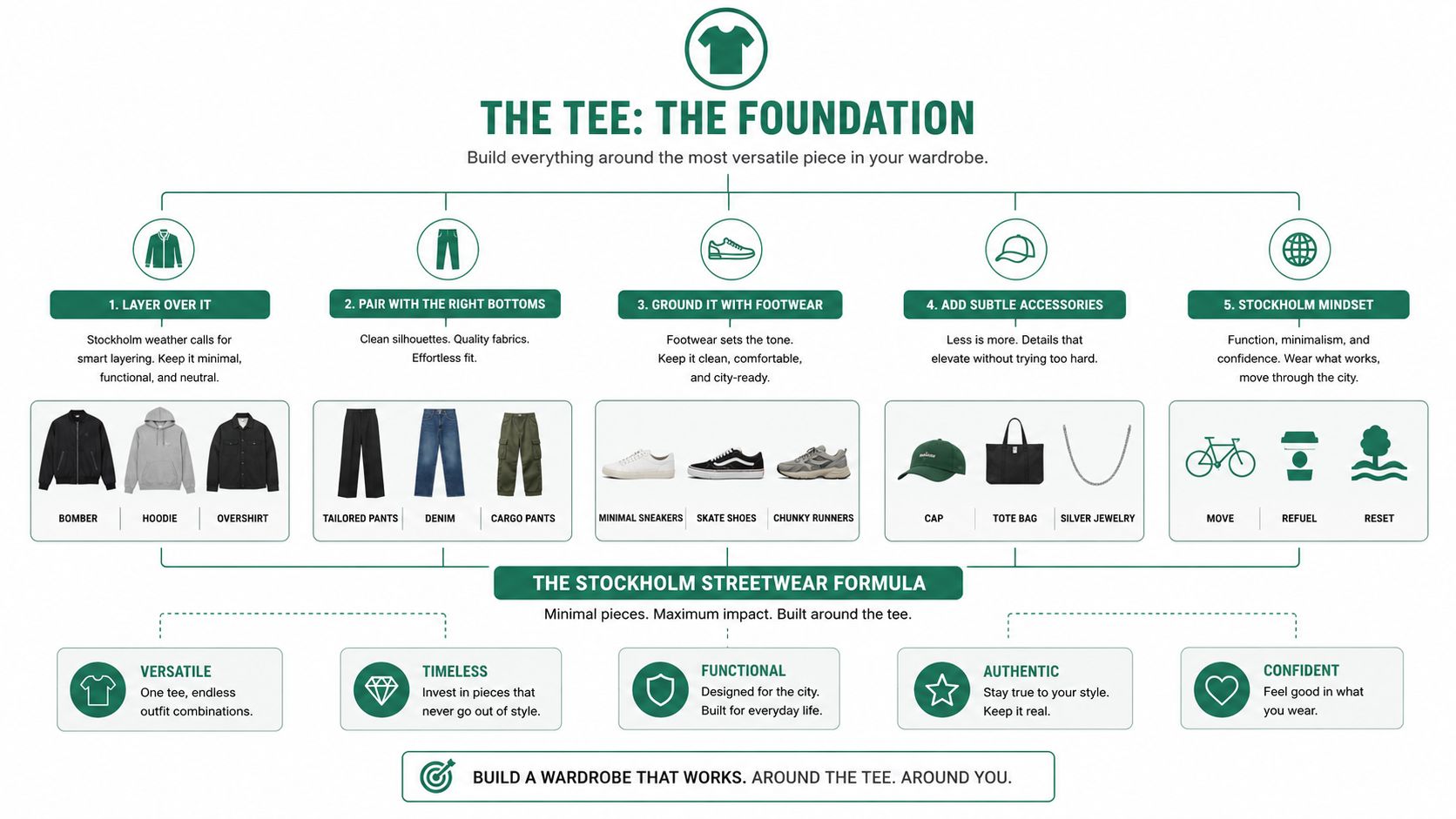
A good capsule doesn't need many pieces. It needs pieces that agree on shape, tone, and how they layer together.
The rotation that keeps everything usable
Start with a small tee run in off-white, washed black, heather grey, and faded indigo. Those colors work with cropped nylon jackets, heavyweight zip hoodies, pleated trousers, carpenter pants, and one shell layer without fighting the rest of the wardrobe. The point is not variety for its own sake, it's making sure each piece can sit under or over the tee without collapsing the proportions.
The boxy top pairs best with tapered or straight-leg bottoms, because too much width everywhere turns the outfit shapeless. A longer overshirt or chore coat can rebalance the shoulders when you want more visual weight on the outside. That's why this silhouette works so well in Stockholm, where a lot of streetwear looks are built from muted color and very clear shape logic.
You can also think of the capsule as unisex by default. Sizes should be chosen by measurement, not gender labels, and accessories do a lot of the finishing work. A beanie, a crossbody bag, and low-profile sneakers keep the outfit grounded without stealing attention from the tee.
2Ghetto's unisex heavyweight letterman jacket fits naturally into that grid because varsity and letterman jackets have a real streetwear lineage, with the style tracing back to 1865 Harvard baseball uniforms and later evolving into a familiar fashion staple. That kind of outerwear gives the boxy tee a sharper frame when the weather turns.
The best capsule decision is simple. If a new piece doesn't match the tee's width, length, and layering logic, it probably doesn't belong in the rotation.
Care and Maintenance to Keep the Box Intact
A boxy tee holds up only if you wash it like shape matters. Once the hem warps or the shoulders peak, the clean square line is gone.
The wash routine that preserves structure
Use a cold wash at 30°C, turn the tee inside out, and choose a mild detergent without optical brighteners. Skip fabric softener, because it can reduce the cotton's body over time and make the shirt feel less crisp. That's especially important for heavier tees, since the whole point is to keep the fabric standing with a bit of structure.
Drying matters just as much. Flat drying is safest, and a wide hanger can work if you don't let the shoulders pull out of shape. Tumble drying slowly collapses the box and shortens length, which is exactly what you don't want if the silhouette depends on a clean hem line.
Reshape the seams while the tee is still damp, then fold it for storage instead of hanging it long term. Hanging can stretch the neckline and slowly change the way the shirt sits at the shoulders. Rotate between multiple tees so each one has time to recover its knit between wears.
If pilling shows up under the arms, handle it early. A fabric shaver or careful de-pilling keeps the surface clean, and a lint brush helps when the tee rubs against fleece or outer layers. Those small habits keep the color calmer and the shape sharper over several seasons.
The practical takeaway is simple. Cold wash, flat dry, fold store. Do that consistently, and the cut stays closer to the day you bought it.
If you want a boxy tee that fits the Stockholm streetwear logic instead of just the size chart, browse 2Ghetto for monochrome unisex pieces that sit clean under hoodies, jackets, and layered fits. The brand's tee and outerwear rotation gives you a straightforward way to build around shape, not hype, and keep your wardrobe anchored in one clear silhouette.